Prebiotic Foods: Best Sources & Simple Ways to Add Them
By the KissMyAbsClub Editorial Team
•Health Is Power Foundation
•Fact-checked against cited sources · July 2026
Find your gut type in 2 minutes. Free quiz, instant results, a starter plan matched to you.
Take the free quiz →
The short version:
- Prebiotics are fibres that feed your good gut bacteria — and you get them from ordinary foods, not just supplements.
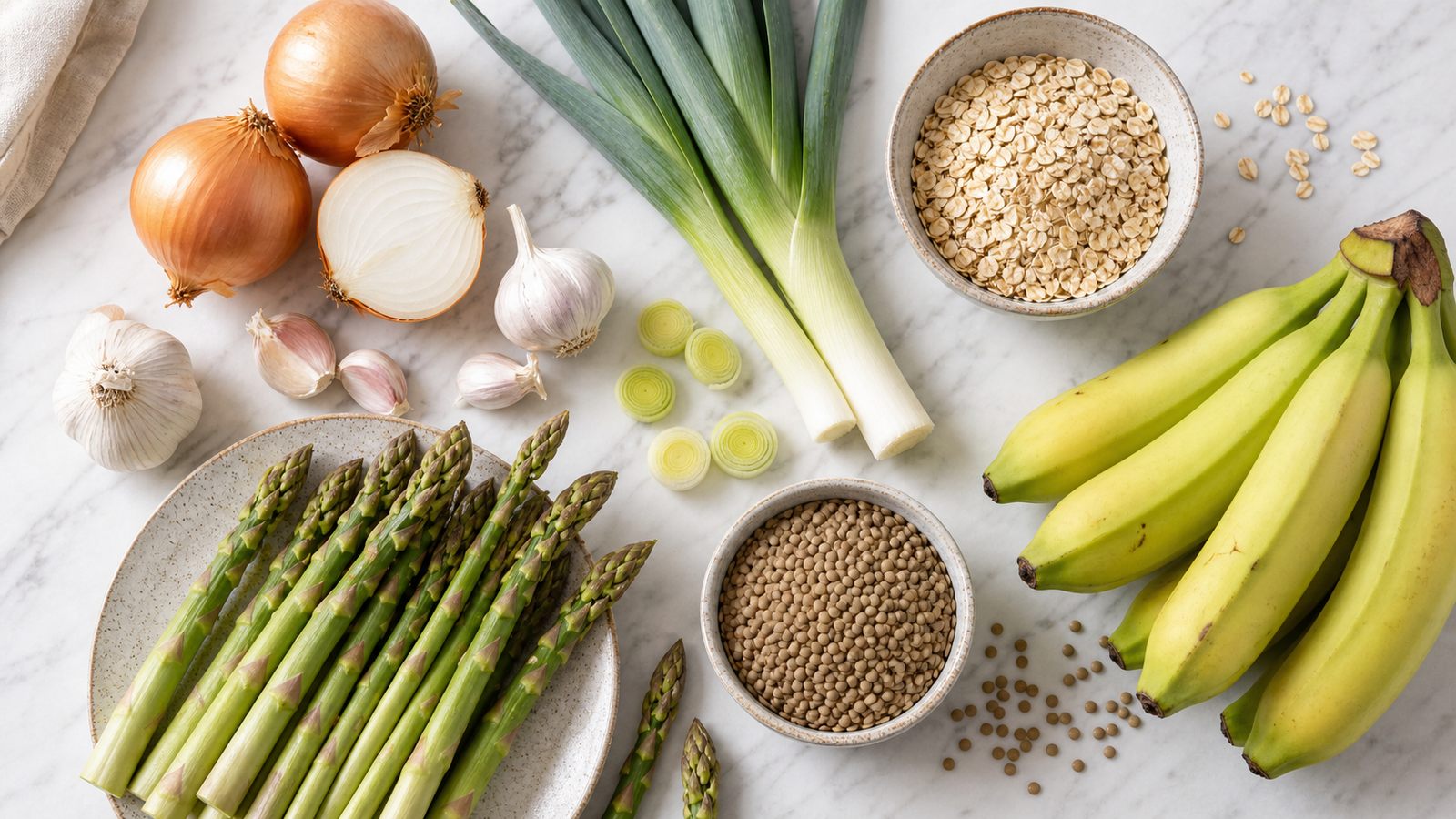
- Top sources: onions, garlic, leeks, asparagus, slightly green bananas, oats, barley, apples, flaxseed, and legumes.
- Variety beats any single food — rotate a range of plants through your week.
- Add them gradually with enough water, or the fermentation can leave you bloated.
"Prebiotic" sounds like a supplement-aisle buzzword, but it's really just a name for a specific job that certain fibres do: feeding the beneficial microbes already living in your gut.1 The good news is you don't need a pill — some of the best prebiotic sources are cheap, everyday foods. Here's the practical list, and how to work them in without paying for it in bloating.
First, what counts as a prebiotic
A prebiotic is a food component — usually a type of fibre — that your body can't digest but your gut bacteria can ferment, to your benefit.1 That's the key difference from probiotics: prebiotics are the food; probiotics are the microbes that eat it. If that distinction is still fuzzy, our prebiotics vs probiotics guide lays it out.
The best prebiotic foods
- Onions, garlic, and leeks — rich in inulin and fructans, among the most studied prebiotics.
- Asparagus — another strong inulin source, best lightly cooked or raw.
- Slightly under-ripe bananas — the greener they are, the more resistant starch they carry.
- Oats and barley — deliver beta-glucan, a prebiotic fibre that also supports heart health.
- Apples — contain pectin, a fermentable fibre (eat the skin).
- Legumes — beans, lentils, and chickpeas are fibre and prebiotic powerhouses.
- Flaxseeds and chia — easy to sprinkle onto meals for a fibre boost.
- Jerusalem artichokes, chicory root, and dandelion greens — less common, but exceptionally high in inulin.
Notice these overlap heavily with a normal healthy diet — that's the point. Feeding your microbes isn't a special protocol; it's mostly "eat more varied plants." Our best foods for gut health guide zooms out to the bigger picture.
Not sure what your gut needs more of? Take our free 2-minute quiz to find your gut type and a starter plan matched to you.
How to add them without the bloating
Prebiotic foods are fermentable by design, so a sudden jump from very little to a lot can leave you gassy. That's not a sign they're bad for you — it's your microbes adjusting. To keep it comfortable:
- Go slow. Add prebiotic foods over a few weeks, not overnight.
- Start small with the most fermentable ones (onions, garlic, legumes) and build up.
- Drink enough water so the fibre can do its job.
- Cook them if raw versions bother you — it can make some easier to tolerate.
Our fibre guide covers the ramp-up in more detail.
Do you need a prebiotic supplement?
For most healthy people, no. A varied, plant-rich diet supplies plenty of prebiotics at a fraction of the cost, and it feeds your whole microbiome rather than a single fibre. Supplements have their place for specific situations, but they're best considered with a clinician rather than as a default. Food first is the sensible rule here.
Reviewed by the Health Is Power Foundation editorial team.
We check each article against authoritative sources before publishing and update it as the evidence changes. Last reviewed July 2026.
Frequently asked questions
- What foods are high in prebiotics?
- Onions, garlic, leeks, asparagus, slightly under-ripe bananas, oats, barley, apples, flaxseeds, and legumes are among the richest. A varied, plant-rich diet delivers plenty — no supplement required.
- What's the difference between prebiotics and probiotics?
- Prebiotics are fibres that feed your beneficial gut bacteria; probiotics are the live beneficial microbes themselves. Prebiotics are the food, probiotics are the diners.
- How do I add prebiotic foods without bloating?
- Increase them gradually over weeks, drink enough water, and start with smaller portions of the most fermentable foods like onions, garlic, and legumes. Your gut adapts over time.
References
- Gibson GR, et al. "The ISAPP consensus statement on the definition and scope of prebiotics." Nature Reviews Gastroenterology & Hepatology, 2017. nature.com
- Harvard T.H. Chan School of Public Health, The Nutrition Source. "The Microbiome." nutritionsource.hsph.harvard.edu
- NHS. "How to get more fibre into your diet." nhs.uk
Medical disclaimer: This article is for general education only and is not medical advice, diagnosis, or treatment. Statements about foods and supplements have not been evaluated by the FDA and are not intended to diagnose, treat, cure, or prevent any disease. Consult a qualified healthcare professional about your health, especially if you have a medical condition, take medication, or have persistent symptoms.
Curious where your gut stands? Take the 2-minute quiz →
