The Best Foods for Gut Health: What to Actually Eat
By the KissMyAbsClub Editorial Team
•Health Is Power Foundation
•Fact-checked against cited sources · June 2026
Find your gut type in 2 minutes. Free quiz, instant results, a starter plan matched to you.
Take the free quiz →
The short version:
- The single most reliable lever is variety of fibre-rich plants — vegetables, fruit, whole grains, legumes, nuts, and seeds.
- Fermented foods (yogurt, kefir, sauerkraut, kimchi) add beneficial microbes and are an easy place to start.
- Aim for many different plants across the week rather than chasing one "superfood."
- Increase fibre gradually and drink enough water, or you'll trade one problem for bloating.
If gut-health advice feels like a maze of supplements and trends, here's the reassuring news: the foundations are simple, cheap, and sitting in the produce aisle. Your gut microbes are essentially a garden — what you feed them shapes which ones thrive. And the research keeps pointing back to the same unglamorous answer: eat a wide range of whole plant foods.1 Let's make that concrete.
1. Fibre-rich plants (the non-negotiable)
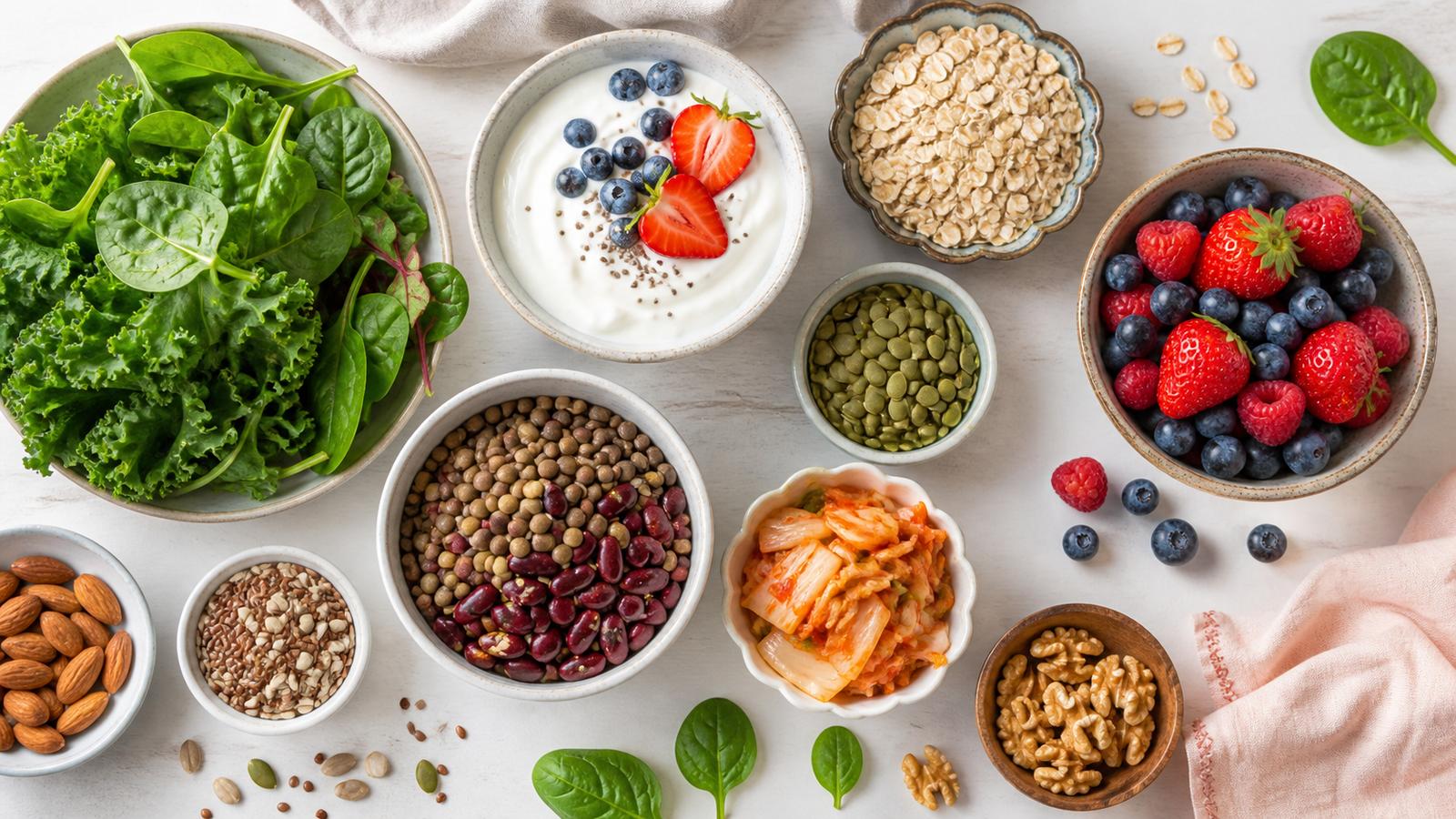
Fibre is the food your gut bacteria actually ferment, producing compounds that support the gut lining and overall health. The most consistent finding in microbiome research isn't a specific food — it's diversity. People who eat a broader range of plants tend to have more diverse gut microbiomes, which is generally associated with better gut health.2 Good sources to rotate through:
- Vegetables — leafy greens, broccoli, carrots, peppers, onions, and garlic.
- Fruit — berries, apples, bananas, citrus (skins and all, where edible).
- Whole grains — oats, barley, brown rice, whole-grain bread.
- Legumes — beans, lentils, and chickpeas, which are fibre powerhouses.
- Nuts and seeds — a handful adds fibre and healthy fats.
A useful target some researchers suggest is aiming for around 30 different plant foods a week — herbs, spices, nuts, and seeds all count, so it's easier than it sounds. If you're starting low, add fibre slowly; our fibre guide covers how to ramp up without the discomfort.
2. Fermented foods
Fermented foods deliver live microbes and are one of the easiest food-first ways to support your gut. Some research suggests diets rich in fermented foods can increase microbiome diversity.3 Worth working in:
- Yogurt and kefir with live or active cultures.
- Sauerkraut and kimchi (the refrigerated, unpasteurised kind keeps its cultures).
- Miso, tempeh, and kombucha for variety.
Two honest caveats: check labels for added sugar (some yogurts and kombuchas are dessert in disguise) and salt (sauerkraut and kimchi can be high), and introduce them gradually. Our fermented foods guide goes deeper.
Not sure where to start? Take our free 2-minute quiz to find your gut type and get a starter plan matched to you.
3. "Prebiotic" foods that feed your good bacteria
Prebiotics are specific fibres that selectively feed beneficial gut bacteria. You don't need a supplement to get them — they're in everyday foods like onions, garlic, leeks, asparagus, slightly under-ripe bananas, oats, and legumes. If you want the distinction between prebiotics, probiotics, and postbiotics spelled out, we cover it in this guide.
4. Polyphenol-rich foods (a bonus lever)
Polyphenols are plant compounds — found in berries, extra-virgin olive oil, dark chocolate, green tea, and colourful vegetables — that your gut microbes help process. They're not a magic bullet, but they're another reason a colourful, plant-forward plate tends to pay off.
What to go easy on
No single food is "banned," but a few patterns tend to work against a healthy gut when they dominate your diet:
- Ultra-processed foods high in refined sugar and low in fibre, eaten in large amounts.
- Artificial sweeteners, where the evidence is still mixed but worth moderating.
- Very low-fibre eating overall — the most common gut-unfriendly habit of all.
The goal isn't perfection or restriction. It's nudging the balance of your plate toward more plants, more fibre, and more variety, most of the time.
A realistic starting plan
- Add one extra plant food per meal this week — a handful of berries, a spoon of beans, a side of greens.
- Introduce one fermented food you'll actually enjoy and eat regularly.
- Swap one refined grain for a whole grain — white rice to brown, white bread to whole-grain.
- Drink enough water as you raise fibre, so it can do its job comfortably.
Reviewed by the Health Is Power Foundation editorial team.
We check each article against authoritative sources before publishing and update it as the evidence changes. Last reviewed June 2026.
Frequently asked questions
- What foods are best for gut health?
- A wide variety of fibre-rich plants — vegetables, fruit, whole grains, legumes, nuts, and seeds — plus fermented foods like yogurt, kefir, sauerkraut, and kimchi. Variety matters more than any single "superfood."
- How quickly does diet change gut health?
- Your microbiome can shift within days, but lasting benefits come from consistent habits over weeks and months. Raise fibre gradually to avoid bloating.
- Are fermented foods good for your gut?
- For most people, yes — they add beneficial microbes and are an easy, food-first way to support gut health. Choose versions with live cultures and watch added sugar and salt.
References
- Harvard T.H. Chan School of Public Health, The Nutrition Source. "The Microbiome." nutritionsource.hsph.harvard.edu
- McDonald D, et al. "American Gut: an Open Platform for Citizen Science Microbiome Research." mSystems, 2018. journals.asm.org
- Wastyk HC, et al. "Gut-microbiota-targeted diets modulate human immune status." Cell, 2021. cell.com
Medical disclaimer: This article is for general education only and is not medical advice, diagnosis, or treatment. Statements about foods and supplements have not been evaluated by the FDA and are not intended to diagnose, treat, cure, or prevent any disease. Consult a qualified healthcare professional about your health, especially if you have a medical condition, take medication, or have persistent symptoms.
