Fermented Foods and Gut Health: Where to Start
By the KissMyAbsClub Editorial Team
•Health Is Power Foundation
•Fact-checked against cited sources · June 2026
Find your gut type in 2 minutes. Free quiz, instant results, a starter plan matched to you.
Take the free quiz →
The short version:
- Fermented foods — yogurt, kefir, kimchi, sauerkraut, miso — are an easy, food-first way to bring live microbes into your diet.
- Not all of them contain live cultures: heat-treated or pasteurized versions don't. Check the label.
- Early research suggests a diet rich in fermented foods may support microbiome diversity — promising, still developing.
- They're also a gentle ally after antibiotics, alongside fiber, as your own microbes rebuild.
Fermented foods are having a moment, but they're nothing new — humans have been fermenting food for thousands of years, long before anyone could explain why it worked. Today they're one of the simplest, most enjoyable ways to support your gut without buying a supplement. Here's what they actually do, where to start, and the caveats the trendier coverage tends to skip.
What "fermented" really means
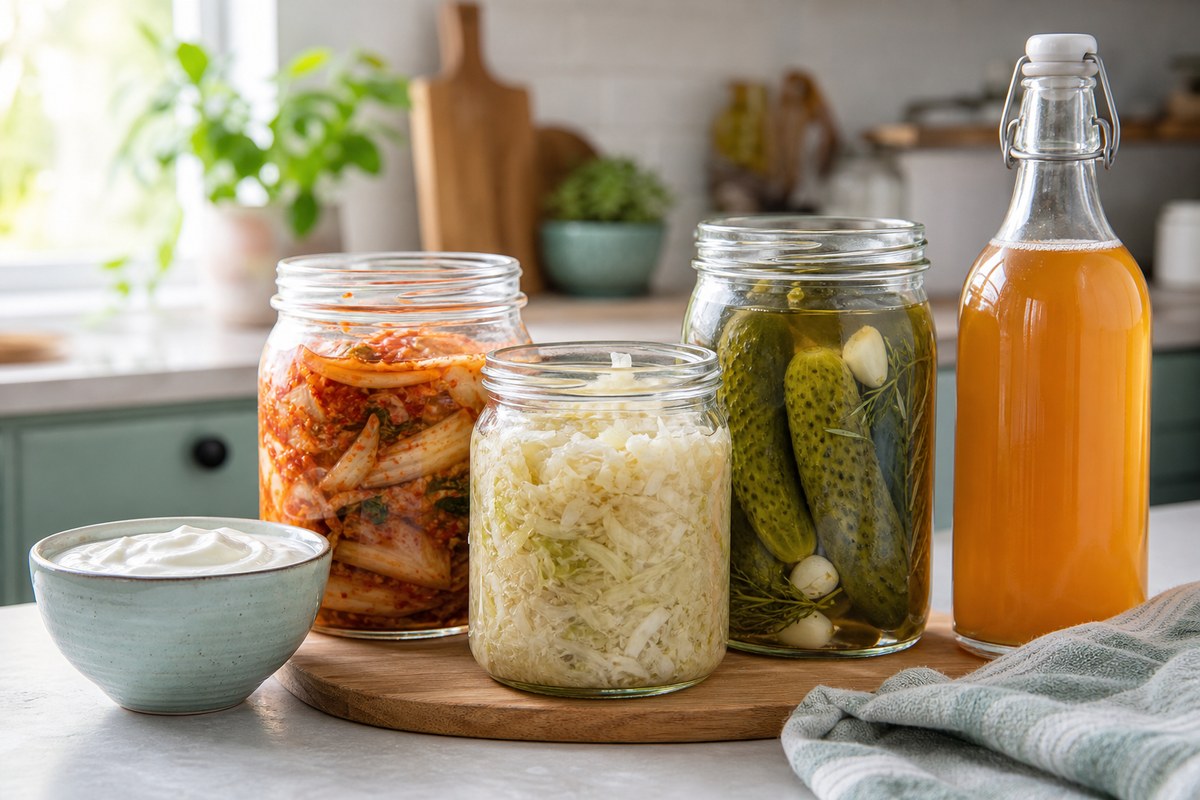
Fermentation is the process where microbes — usually bacteria or yeast — break down sugars in food. That's what gives yogurt its tang, sauerkraut its sourness, and kefir its fizz. Many fermented foods carry live microbes similar to probiotics, which is the main reason they're linked to gut health. Common examples include yogurt, kefir, traditionally fermented sauerkraut and kimchi, miso, tempeh, and kombucha.1
The one label detail that matters
Here's the caveat that trips people up: not all fermented foods contain live cultures. If a product is pasteurized or heat-treated after fermentation — common for shelf-stable sauerkraut, many store kombuchas, and some pickles — the heat kills the microbes. The food can still taste fermented and offer other benefits, but if live cultures are your goal, look for "live and active cultures," unpasteurized, and refrigerated products. (Note that some fermented foods like sourdough bread and most miso are cooked before eating, so they aren't a live-culture source either.)
What the science says (and doesn't)
The evidence here is encouraging but still maturing. A notable Stanford study found that a diet high in fermented foods increased microbiome diversity and was associated with lower markers of inflammation, more so than a high-fiber diet over the same period.2 That's an exciting signal — but it's one study, and the field is young. As with probiotics generally, effects can be specific and individual. The honest framing: fermented foods are a low-risk, food-first habit with promising evidence, not a proven treatment for any condition.
A gentle ally after antibiotics
Antibiotics are sometimes essential, but they don't distinguish between harmful and helpful bacteria, so they can disrupt the gut microbiome.1 As your own microbes rebuild afterward, a food-first approach — fermented foods you enjoy plus a steady, varied fiber intake — is a gentle, sensible way to support recovery. Think of it as creating good conditions, not forcing a fix. Always follow your clinician's guidance, finish prescribed courses as directed, and check with a pharmacist about timing if you're also taking a probiotic supplement.
Where to start
- Pick foods you genuinely like. Yogurt or kefir for an easy entry; kimchi or sauerkraut if you enjoy tang.
- Start small. A few tablespoons or a small glass daily. If you're not used to fermented foods, ramp up gradually to avoid temporary gas.
- Read the label. Refrigerated, unpasteurized, "live cultures" if you want the microbes.
- Make it a habit, not an event. Small and consistent beats a big one-off.
A safety note: people who are pregnant, immunocompromised, or managing histamine intolerance should check with a clinician before leaning heavily on certain fermented foods, and homemade ferments need proper, hygienic technique.
Curious where your gut stands? Our free 2-minute quiz gives you a gut type and a starter plan matched to you.
Reviewed by the Health Is Power Foundation editorial team.
We check each article against authoritative sources before publishing and update it as the evidence changes. Last reviewed June 2026.
Frequently asked questions
- Are fermented foods the same as probiotics?
- Not exactly. Many contain live microbes similar to probiotics, but not all do — pasteurized versions have no live cultures. Look for "live and active cultures," unpasteurized and refrigerated.
- Do fermented foods help after antibiotics?
- They're a gentle, food-first way to support recovery as your microbes rebuild — supportive, not a cure. Always follow your clinician's guidance.
- How much should I eat?
- There's no official dose. Small daily servings of foods you enjoy are a reasonable, low-risk approach — start small if you're new to them.
References
- Harvard T.H. Chan School of Public Health, The Nutrition Source. "Fermented Foods." nutritionsource.hsph.harvard.edu
- Wastyk HC, et al. "Gut-microbiota-targeted diets modulate human immune status." Cell, 2021 (Stanford fermented-foods study). cell.com
Medical disclaimer: This article is for general education only and is not medical advice, diagnosis, or treatment. Statements about foods and supplements have not been evaluated by the FDA and are not intended to diagnose, treat, cure, or prevent any disease. Consult a qualified healthcare professional about your health, especially if you are pregnant, immunocompromised, or taking medication.
Curious where your gut stands? Take the 2-minute quiz →
