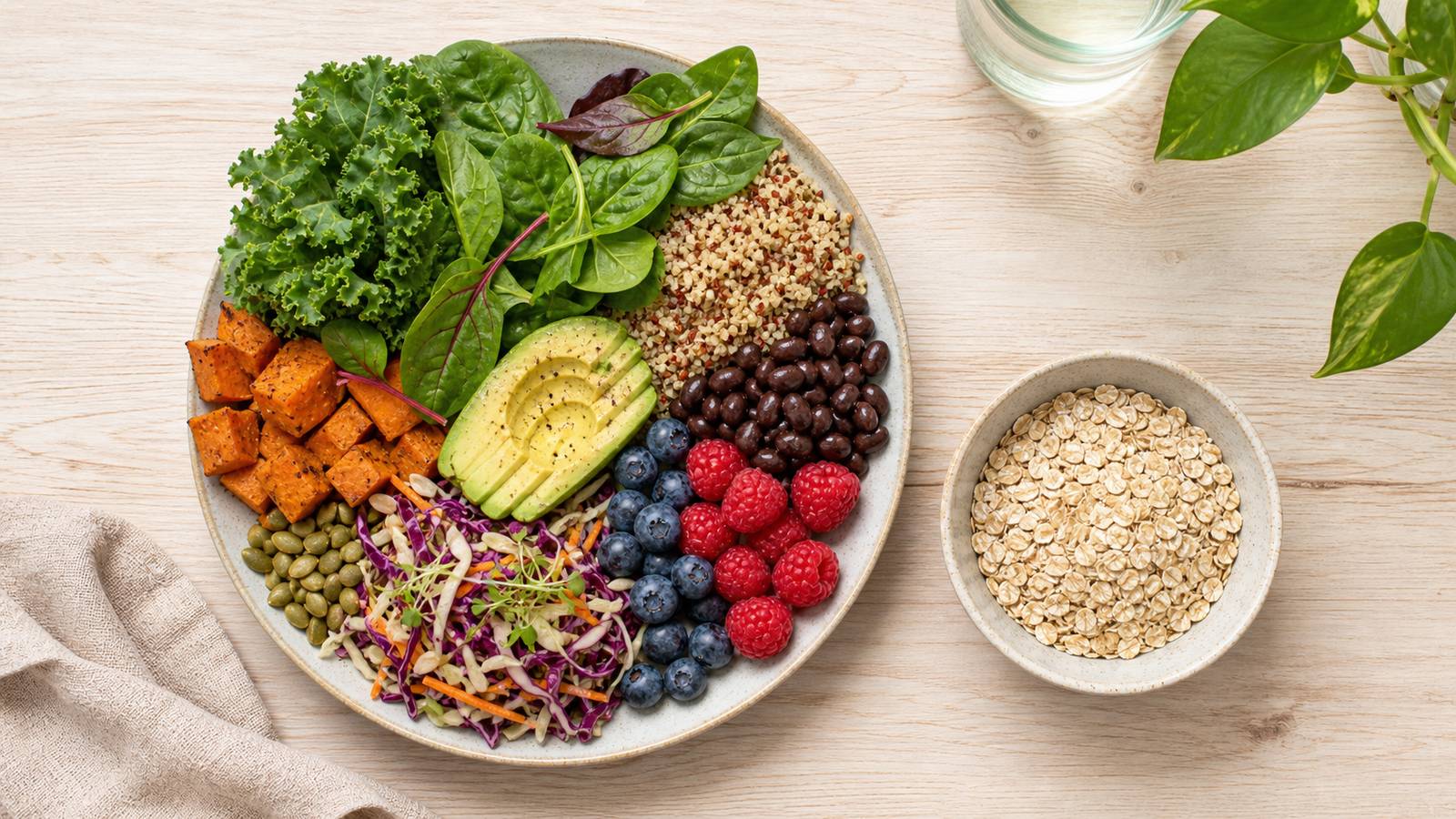
We tend to think of blood sugar as a simple pipeline: you eat carbohydrate, it becomes glucose, glucose enters the blood. True enough — but there's a busy, often-overlooked player in the middle of that story: your gut. The community of microbes living in your digestive tract, known as the gut microbiome, does more than digest food. A growing body of research suggests it also helps shape how your body responds to what you eat, including how your blood sugar behaves after a meal.1 Here's a calm, plain-English tour of what scientists understand so far — and, importantly, what they don't.
Your large intestine hosts trillions of bacteria, along with other microbes. Think of them less as passengers and more as a working garden: what you feed them shapes which species thrive. When you eat fibre that your own body can't break down, these microbes ferment it. That fermentation isn't a side effect — it's central to the connection between the gut and the rest of the body. If you'd like the fuller picture of what a well-fed microbiome looks like, our guide to the best foods for gut health is a good companion to this article.
When gut bacteria ferment fibre, they produce short-chain fatty acids (SCFAs) such as butyrate, propionate, and acetate. These small molecules do a surprising amount of work. They help nourish the cells lining your gut, and they're involved in signals related to appetite and how the body processes energy.2 Researchers are still untangling the exact mechanisms, but the general pattern is consistent: diets that give gut bacteria plenty of fibre to work with tend to be associated with steadier blood sugar across large groups of people.
This helps explain something you may have noticed intuitively. A bowl of lentils and a slice of white bread both contain carbohydrate, but they don't feel the same afterwards. Fibre slows how quickly food moves through you and gives your microbes something to ferment, so the arrival of glucose into the blood is gentler and more gradual. If you want to go deeper on fibre specifically, our fibre and gut health guide unpacks how it works.
One of the more striking findings in this field is that blood sugar responses are surprisingly personal. In research where people wore continuous glucose monitors and ate identical meals, the same food raised blood sugar sharply in some individuals and barely moved it in others.3 Differences in the gut microbiome appeared to be part of the explanation, alongside factors like sleep, physical activity, stress, and genetics.
The takeaway isn't that you need a lab to eat well. It's a reason to be a little skeptical of one-size-fits-all food rules and rigid "good food / bad food" lists. Two people can follow the same advice and get different results — and that's normal, not a personal failing.
It's easy for a topic like this to tip into hype, so a few honest boundaries are worth stating clearly. The science here is genuinely promising but still evolving. Most of what we know describes associations across populations, not guaranteed outcomes for any one person. Nobody can "reset" or "fix" a microbiome with a single food, a supplement, or a cleanse, and this article is not about treating or managing any medical condition.
If you're concerned about your blood sugar — or you have symptoms, a family history, or an existing diagnosis — that's a conversation for a qualified clinician who can order proper testing and give advice tailored to you. General wellness education, like this article, is a starting point for understanding, not a substitute for individual medical care.
None of this is exotic. The habits most consistently associated with a well-fed microbiome and steadier blood sugar are the same ones that show up in almost every credible nutrition guide:
For the food side in practical detail, our companion piece on foods that support healthy blood sugar turns these ideas into an everyday plate.
Curious how your habits relate to blood sugar? Take the 2-minute quiz →
