Home ›
Guides › Why You Wake Up at 3am — and How to Stay Asleep
Why You Wake Up at 3am — and How to Stay Asleep
By the KissMyAbsClub Editorial Team
•Health Is Power Foundation
•Fact-checked against cited sources · August 2026
Not sure what's wrecking your sleep? Take our free 2-minute quiz for a plain-English starting point.
Take the free quiz →
The short version:
- Brief night waking is normal. The problem is usually staying awake, not waking itself.
- Common culprits: alcohol, late heavy meals, a too-warm or noisy room, and stress.
- Don't clock-watch. Checking the time fuels the anxiety that keeps you up.
- Have a calm resettle plan instead of lying there frustrated.
You fall asleep fine, then snap awake in the small hours — often around the same time — and can't drift back off. It's one of the most maddening sleep patterns, partly because the middle of the night is when worries feel loudest. The good news: waking briefly is a normal part of sleep, and what keeps you awake afterward is usually addressable.
Waking up is normal — staying awake is the issue
Sleep moves through cycles roughly every 90 minutes, and we naturally surface toward lighter sleep between them. Most of these micro-awakenings are so brief we never remember them.1 The trouble starts when something wakes you more fully and then your mind switches on. So the useful question isn't "why did I wake up?" but "why couldn't I fall back asleep?"
The usual culprits
A few things reliably fragment the second half of the night:
- Alcohol. A nightcap helps you fall asleep but causes rebound wakefulness a few hours later, which is a classic cause of 3am waking.
- Late, heavy meals. Eating close to bed can disrupt sleep; give yourself a buffer after dinner where you can.
- Room environment. A room that's too warm, too bright, or noisy nudges you out of deeper sleep. Cool, dark, and quiet is the target.2
- Stress. When you're wound up, that natural light-sleep moment turns into full wakefulness as your mind engages.
Stop clock-watching
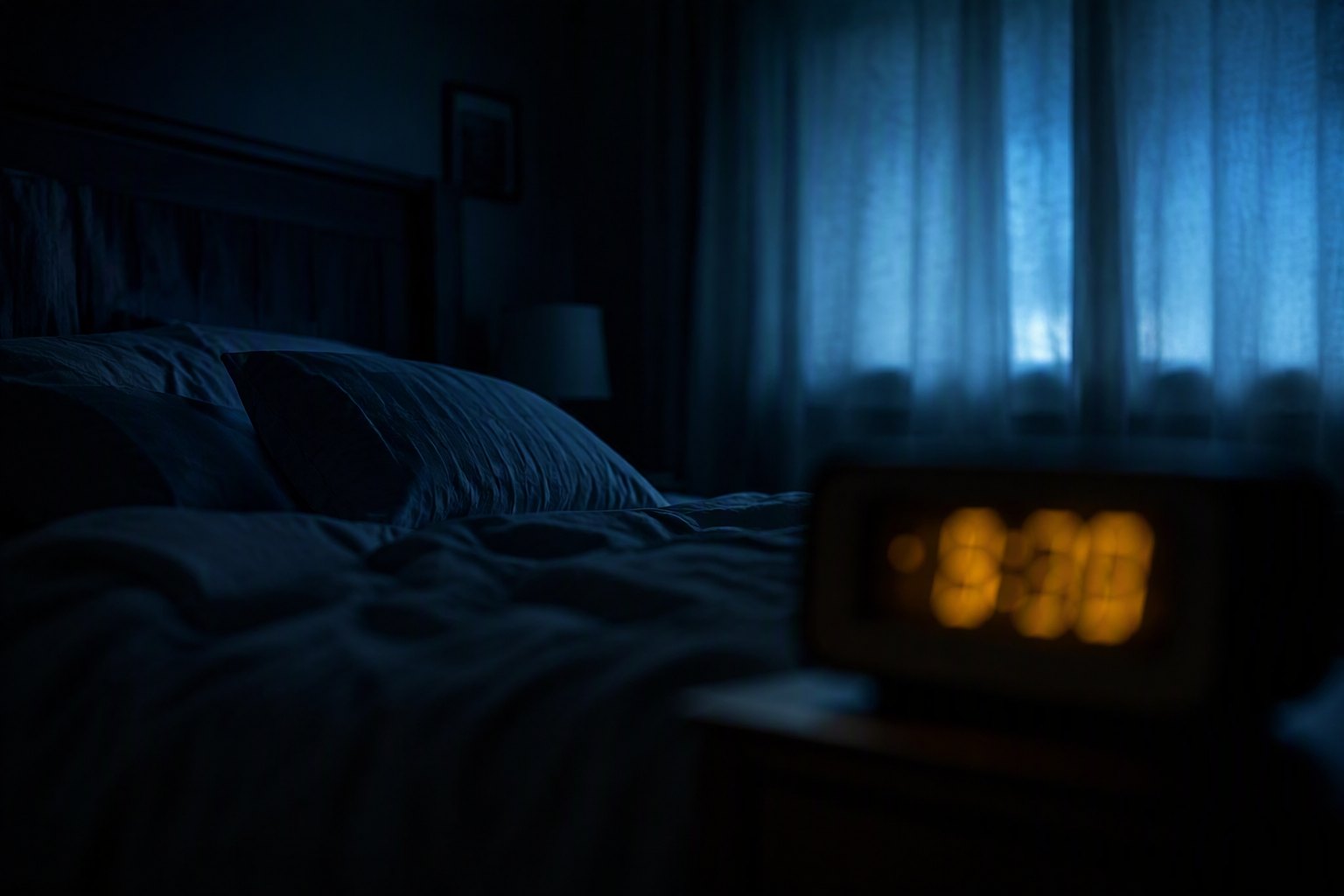
Glancing at the clock at 3am almost guarantees a spiral: now you're calculating lost sleep and pressuring yourself, which raises arousal and makes sleep less likely. Turn the clock away, or cover it. You don't need to know the time — you need to feel safe drifting off again.
A calm resettle routine
If you're awake for more than about 20 minutes, use the same principle that helps at the start of the night: don't stay in bed fighting it. Get up, keep the lights low, and do something quiet and undemanding until you feel sleepy again, then return to bed.3 Slow breathing and progressive muscle relaxation can help you resettle without getting up. The aim is to keep the bed associated with calm, not with lying awake frustrated.
Daytime habits that help the night
Consistent sleep is built during the day: a regular wake time, morning light exposure, movement, and sensible caffeine and alcohol timing all stabilise your nights. If you drink alcohol, experiment with earlier or less, and notice whether your 3am waking eases — for many people it's the biggest single factor.
When to seek help
Occasional night waking is normal. But if you consistently wake unrefreshed, snore heavily, gasp, or feel excessively sleepy in the day, those can be signs of a sleep disorder worth discussing with a clinician. Persistent insomnia also has effective, non-medication treatments — it's worth asking about.
Want a plan matched to your sleep? Our free 2-minute quiz reads your sleep profile and gives you a starter plan.
Reviewed by the Health Is Power Foundation editorial team.
We check each article against authoritative sources before publishing and update it as the evidence changes. Last reviewed August 2026.
Frequently asked questions
- Why do I keep waking up at 3am?
- Waking briefly between sleep cycles is normal; the issue is usually what keeps you awake afterward. Common causes include alcohol's rebound effect a few hours after drinking, late heavy meals, a too-warm or noisy bedroom, and stress that switches your mind on during a natural light-sleep moment.
- How do I get back to sleep in the middle of the night?
- Don't clock-watch — turn the clock away. Try slow breathing or muscle relaxation in bed. If you're still awake after about 20 minutes, get up, keep lights low, do something quiet and dull, and return to bed when you feel sleepy so the bed stays associated with rest rather than frustration.
- Is waking up during the night a sign of something serious?
- Usually not — brief awakenings are normal. But if you regularly wake unrefreshed, snore heavily or gasp, or are very sleepy during the day, it's worth talking to a healthcare professional, as these can indicate a treatable sleep condition.
References
- National Institutes of Health, NHLBI. "How Sleep Works – Sleep Phases and Stages." nhlbi.nih.gov
- Centers for Disease Control and Prevention. "Tips for Better Sleep." cdc.gov
- NHS. "Insomnia – self-help tips to improve your sleep." nhs.uk
Medical disclaimer: This article is for general education only and is not medical advice, diagnosis, or treatment. It does not diagnose or treat sleep disorders such as insomnia or sleep apnea. If poor sleep is persistent, severe, or affecting your health, please consult a qualified healthcare professional.
Not sure where to start? Take the 2-minute sleep quiz →
