Home ›
Guides › Do Sleep Trackers Actually Help? An Honest Look
Do Sleep Trackers Actually Help? An Honest Look
By the KissMyAbsClub Editorial Team
•Health Is Power Foundation
•Fact-checked against cited sources · August 2026
Not sure what's wrecking your sleep? Take our free 2-minute quiz for a plain-English starting point.
Take the free quiz →
The short version:
- Trackers estimate sleep from movement and heart rate — useful for trends, not medical-grade precision.
- Their real value is patterns: spotting how alcohol, late nights, or caffeine change your sleep.
- They don't fix sleep by themselves — and can backfire if the data makes you anxious.
- A tracker complements good habits; it doesn't replace them.
Sleep trackers — wristbands, rings, watches, and phone apps — have made "how did I sleep?" a data question. They can be genuinely helpful, but they're also widely misunderstood. Here's a straight look at what they do well, where they fall short, and whether one is worth it for you.
How sleep trackers work
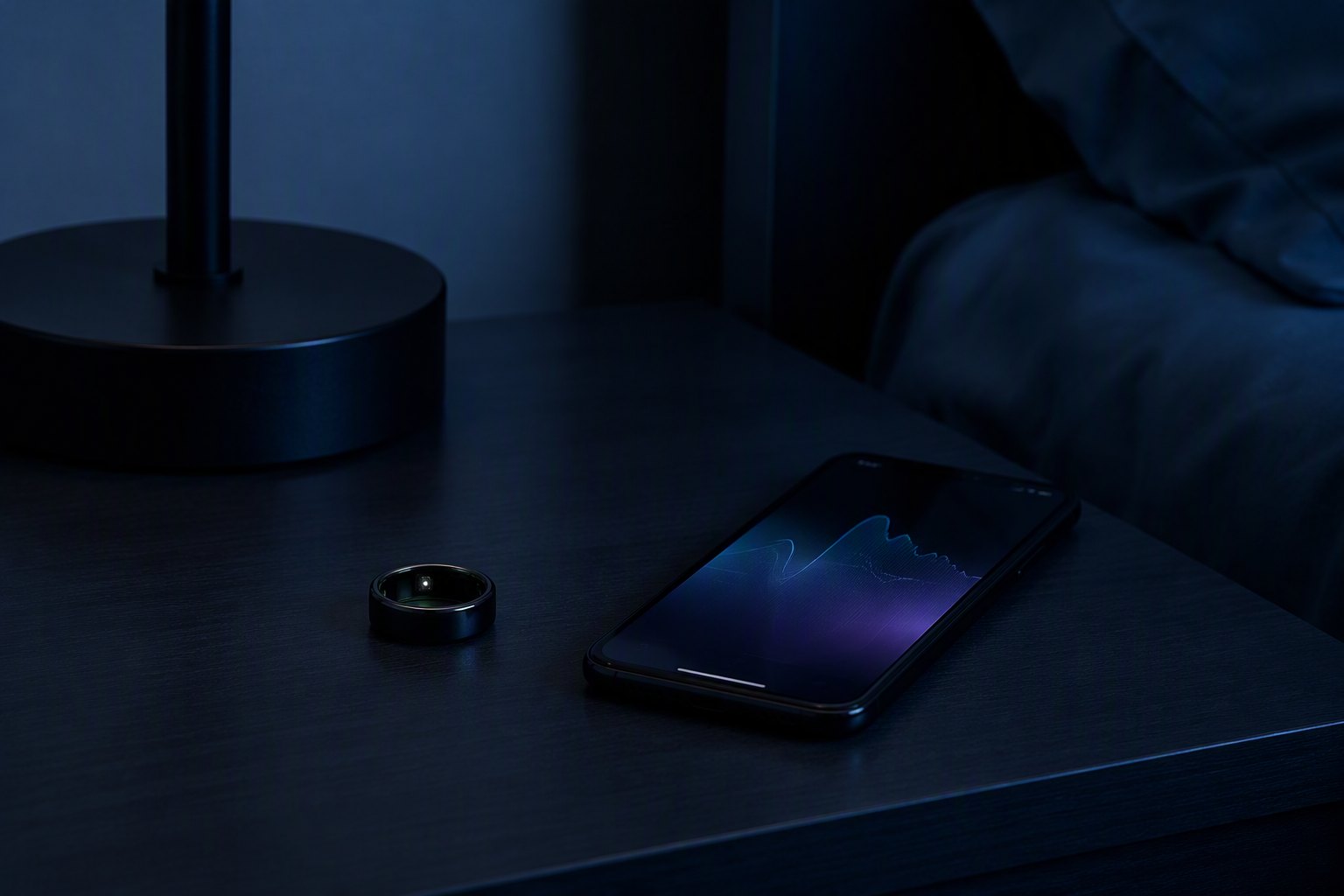
Most consumer trackers don't measure sleep directly. They infer it from signals like movement, heart rate, and sometimes breathing or temperature, then estimate your sleep stages with algorithms.1 That's clever and useful for spotting trends, but it's an estimate — not the electrode-based measurement used in a sleep lab. Accuracy for total sleep time is often reasonable; stage-by-stage breakdowns ("you got X minutes of deep sleep") are far rougher and vary between devices.
What they're genuinely good for
The best use of a tracker is pattern-spotting over weeks. Because it logs every night automatically, it can reveal how your choices affect your sleep: the nights after alcohol, the effect of a consistent wake time, how a late coffee or a stressful day shows up. Those personalised patterns — more than any single night's score — are where a tracker earns its keep. It can also nudge helpful habits by making consistency visible.
Where they fall short
A tracker can't diagnose sleep disorders, and its stage data shouldn't be taken as clinical truth. There's also a real downside: for some people, fixating on scores creates anxiety about sleep — sometimes called "orthosomnia" — which ironically makes sleep worse.2 If checking your score stresses you out or you find yourself chasing the number, the tracker is working against you.
Do they actually improve sleep?
A tracker is a measurement tool, not a treatment. It won't improve your sleep on its own — the improvement comes from the habits you change in response to what you see. Used well, the feedback loop can motivate better routines. Used poorly, it's just a nightly grade that makes you tense. The device is only as helpful as the action it prompts.
Should you get one?
If you're curious, like data, and will use it to test changes (and won't spiral over the numbers), a tracker can be a useful, low-stakes way to understand your sleep. If you already know your issues, or you're prone to sleep anxiety, your money and attention are better spent on the fundamentals: consistent timing, morning light, a good wind-down, and a cool, dark, quiet room.
The bottom line
Trackers are a helpful mirror, not a magic fix. Treat the data as a rough guide to trends, act on the patterns, and don't let a nightly score dictate how you feel. Good habits still do the heavy lifting.
Want a plan matched to your sleep? Our free 2-minute quiz reads your sleep profile and gives you a starter plan.
Reviewed by the Health Is Power Foundation editorial team.
We check each article against authoritative sources before publishing and update it as the evidence changes. Last reviewed August 2026.
Frequently asked questions
- Are sleep trackers accurate?
- They're reasonably good at estimating total sleep time but much rougher at breaking sleep into stages, since consumer devices infer sleep from movement and heart rate rather than measuring brain activity. Treat the numbers as trend estimates, not medical-grade measurements.
- Do sleep trackers actually improve your sleep?
- Not by themselves — a tracker measures sleep, it doesn't treat it. The benefit comes from acting on the patterns it reveals, like seeing how alcohol or late nights affect you and adjusting. Used to guide better habits it can help; used as a nightly grade it can cause anxiety that worsens sleep.
- Should I buy a sleep tracker?
- If you enjoy data and will use it to test habit changes without stressing over the score, it can be a useful tool. If you already know your issues or tend toward sleep anxiety, focus first on the fundamentals — consistent timing, morning light, a wind-down routine, and a cool, dark, quiet room.
References
- National Institutes of Health, NHLBI. "How Sleep Works." nhlbi.nih.gov
- American Academy of Sleep Medicine / Sleep Education. "Healthy Sleep Habits." sleepeducation.org
Medical disclaimer: This article is for general education only and is not medical advice, diagnosis, or treatment. It does not diagnose or treat sleep disorders such as insomnia or sleep apnea. If poor sleep is persistent, severe, or affecting your health, please consult a qualified healthcare professional.
Not sure where to start? Take the 2-minute sleep quiz →
