Can't Sleep? What to Do Right Now (Even at 3am)
By the KissMyAbsClub Editorial Team
•Health Is Power Foundation
•Fact-checked against cited sources · September 2026
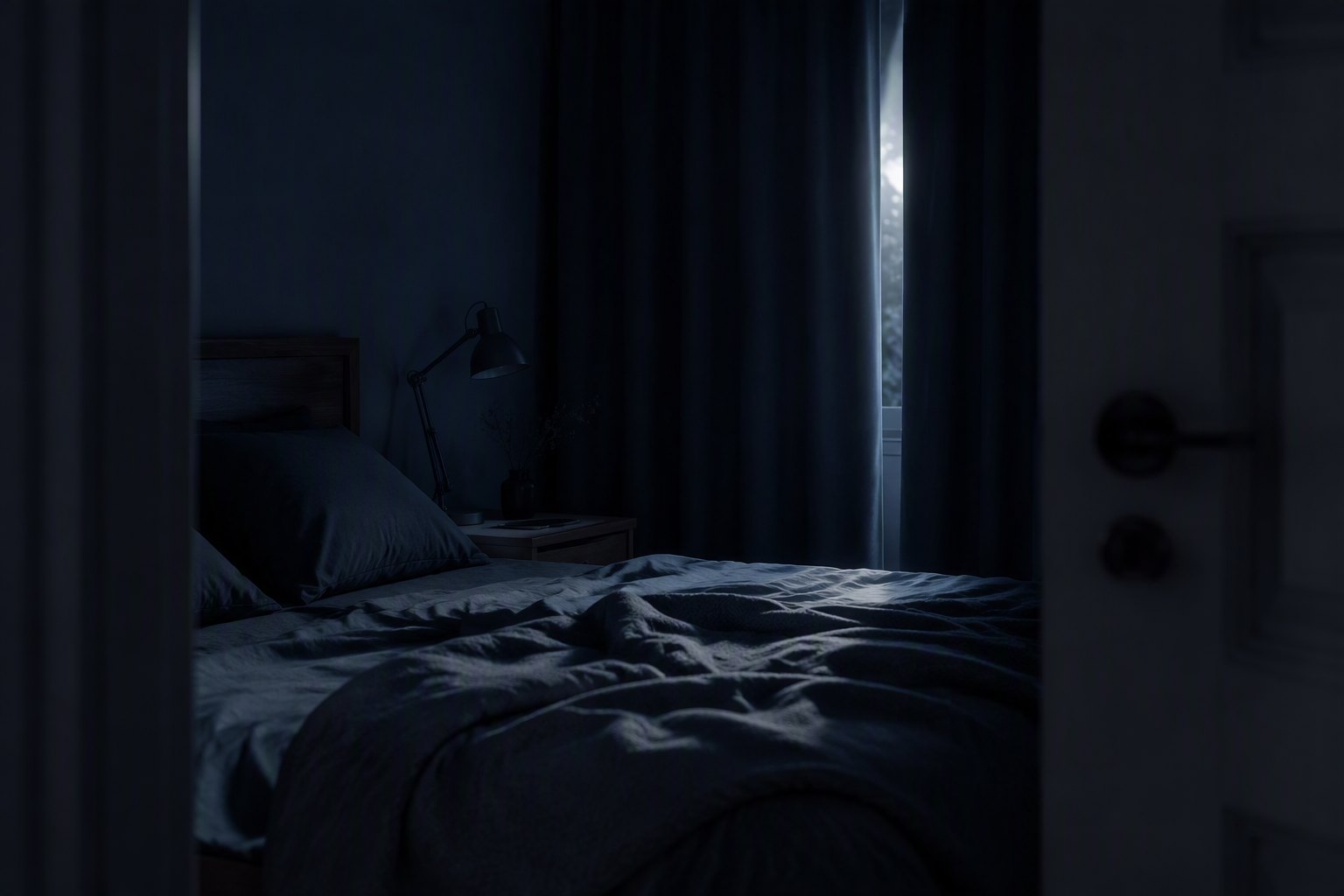
If you're reading this in bed right now
Do these in order. Then put the phone face-down — the screen is working against you.
- Turn the clock away. Working out how many hours you have left is the fastest way to stay awake.
- Cyclic sighing, for a few minutes. Two inhales through the nose (the second a short top-up), then one long, slow exhale through the mouth. Repeat.
- The eye-movement trick. Eyes closed. Slowly look left and right a few times, roll them counterclockwise, then clockwise, then gently look toward your nose — long exhales throughout.
- Cool down. Push the covers back or put a foot outside them. Your body needs to shed heat to fall asleep.
- Still wide awake after about 20 minutes? Get up. Low light, something dull, back to bed when you feel sleepy.
One bad night does no lasting harm, and trying hard to sleep is itself what keeps you awake. The goal right now is not to force sleep but to take away the things blocking it: a racing clock, a tense body, a busy brain, and a bed your mind has started to associate with lying awake.
First: stop trying so hard
Sleep is one of the few things that effort makes worse. The harder you try, the more alert your nervous system becomes — which is why the moment you give up and decide to just rest is so often the moment you drift off. Everything below works by lowering arousal, not by forcing sleep.
So give yourself permission: lying quietly with your eyes closed is still restful, even if you don't sleep. That shift alone takes pressure off.
The breathing pattern Stanford tested Tested in a trial
In a 2023 randomised trial at Stanford, researchers including neuroscientist Andrew Huberman compared several five-minute daily breathing exercises against mindfulness meditation in 111 volunteers. Cyclic sighing — the exhale-focused pattern — produced the greatest improvement in mood and the largest drop in breathing rate.12
How to do it:
- Inhale through your nose until your lungs feel mostly full.
- Take a second, shorter sip of air through your nose to fill them completely.
- Exhale slowly and fully through your mouth — make the exhale noticeably longer than the inhales.
- Repeat for two to five minutes.
To be clear about the evidence: the study measured stress and mood during the day, not sleep itself. But a slower breath and a calmer nervous system are exactly what sleep onset needs, and the long exhale is the part doing the work.
Huberman's eye-movement trick Plausible, not yet trialled
This one sounds odd, and Huberman says as much himself. With your eyes closed, move them slowly from side to side, then roll them in a circle counterclockwise, then clockwise, and finish by gently turning them inward toward your nose — all while breathing out slowly.
His explanation: to fall asleep, your brain has to stop tracking where your body is in space. These eye movements engage the vestibular system — your sense of balance — in a way that resembles being rocked, which may help your brain let go of your body's position.3 It is the same principle behind the rocking features now appearing in some beds.
We are labelling this honestly: it has not been tested in a sleep study. It is harmless, free, and takes a minute. Worth trying tonight.
The cognitive shuffle Some early evidence
If your mind is racing through tomorrow's problems, give it something harmless and random to chew on instead. Pick any word — say, blanket. For each letter, picture as many unrelated things as you can: b — banana, bicycle, bee; l — lighthouse, lemon, lamp…
The idea, developed by cognitive scientist Luc Beaudoin, is that disconnected, low-stakes images resemble the scrambled thinking of the moment you drift off — and crowd out the worry loop at the same time.
Cool your body down
Your core temperature drops as you fall asleep. A hot bed fights that. Push the duvet back, stick a foot out, or turn a fan on. If you are regularly waking hot, a cooler room (around 16–19°C / 60–67°F is a common recommendation) is worth trying.
Still awake after 20 minutes? Get up Recommended in clinical guidelines
This is the best-supported advice on the page. Lying in bed awake and frustrated teaches your brain that bed is a place for being awake. So after roughly 20 minutes of wakefulness:
- Get up and go to another room.
- Keep the light dim and warm — a lamp, not the ceiling light, and ideally not a screen.
- Do something dull: fold laundry, read something unexciting on paper, sit quietly.
- Return to bed only when you feel genuinely sleepy. Repeat if needed.
This is called stimulus control, and the American Academy of Sleep Medicine recommends it as a standalone treatment for chronic insomnia.45 It feels counterintuitive. It works.
Waking up like this often? Our free 2-minute quiz shows which of four sleep patterns fits you — and what to change first.
What not to do at 3am
- Don't check the time. Every glance restarts the "how much sleep is left" calculation.
- Don't open email, news or social media. It is designed to keep you engaged — the opposite of what you need.
- Don't turn on bright overhead lights. Bright light signals morning to your body clock.
- Don't reach for alcohol. It can make you drowsy, but it fragments sleep later in the night.
- Don't lie there fighting it. See the 20-minute rule above.
Tomorrow: the part that actually prevents this
What you do the morning after matters more than anything you do at 3am. The instinct is to sleep in, nap long, and go to bed early to "catch up." All three tend to make the following night worse.
Instead, get up at your normal time, even after a bad night. Research drawing on biometric data from more than 170,000 WHOOP members found that people with consistent sleep and wake times reported lower stress and better mood — a pattern that held regardless of how long they slept.6 Consistency, not catch-up, is what resets your system.
Then get outside within an hour of waking. Morning daylight is the strongest signal your body clock receives, and it sets up that evening's sleepiness.
Use our sleep calculator to work out a bedtime that fits your wake-up time in 90-minute cycles.
When to talk to someone
Occasional bad nights are normal. If you are struggling to sleep three or more nights a week for several months, or it is affecting how you function during the day, speak to a doctor. Effective help exists, and the first-line approaches are behavioural rather than medication.5
Reviewed by the Health Is Power Foundation editorial team.
We check each article against authoritative sources before publishing and label how strong the evidence is for each technique. Last reviewed September 2026.
Frequently asked questions
- Is it better to get up if I can't sleep?
- If you have been awake for roughly 20 minutes and feel alert or frustrated, yes. Getting up, keeping the lights low and doing something dull until you feel sleepy is called stimulus control, and it is one of the behavioural approaches the American Academy of Sleep Medicine recommends. It stops your brain learning that bed is where you lie awake.
- Does Huberman's eye-movement trick actually work?
- It has not been tested in a sleep trial, so treat it as a plausible, harmless thing to try rather than a proven method. The idea is that slow eye movements engage the vestibular (balance) system in a way that resembles being rocked, helping your brain stop tracking your body's position. Many people report it helps; it costs nothing to find out.
- Should I sleep in after a bad night?
- Usually not. Keeping your normal wake time protects the next night's sleep. Large wearable datasets suggest that consistent sleep and wake times track with better mood and recovery, independent of total hours. A short nap before 3pm is fine if you need one.
References
- Balban MY, Neri E, Kogon MM, et al. "Brief structured respiration practices enhance mood and reduce physiological arousal." Cell Reports Medicine, 2023. pmc.ncbi.nlm.nih.gov
- Stanford Medicine. "Cyclic sighing can help breathe away anxiety." 2023. med.stanford.edu
- Huberman A. On eye movements and the vestibular system at sleep onset (post). x.com/hubermanlab
- Edinger JD, Arnedt JT, Bertisch SM, et al. "Behavioral and psychological treatments for chronic insomnia disorder in adults: an American Academy of Sleep Medicine clinical practice guideline." J Clin Sleep Med 2021;17(2):255-62. jcsm.aasm.org
- NHS. "Insomnia." Self-help tips. nhs.uk
- WHOOP. Research linking sleep consistency, HRV and resting heart rate with reported stress and mood across 170,000+ members. whoop.com
Medical disclaimer: This article is for general education only and is not medical advice, diagnosis, or treatment. It does not diagnose or treat sleep disorders such as insomnia or sleep apnea. If poor sleep is persistent, severe, or affecting your health, please consult a qualified healthcare professional.
Not sure what's behind your sleep? Take the 2-minute quiz →
